
What Does a Home Heart-Rate Reading Mean When You Have AFib?
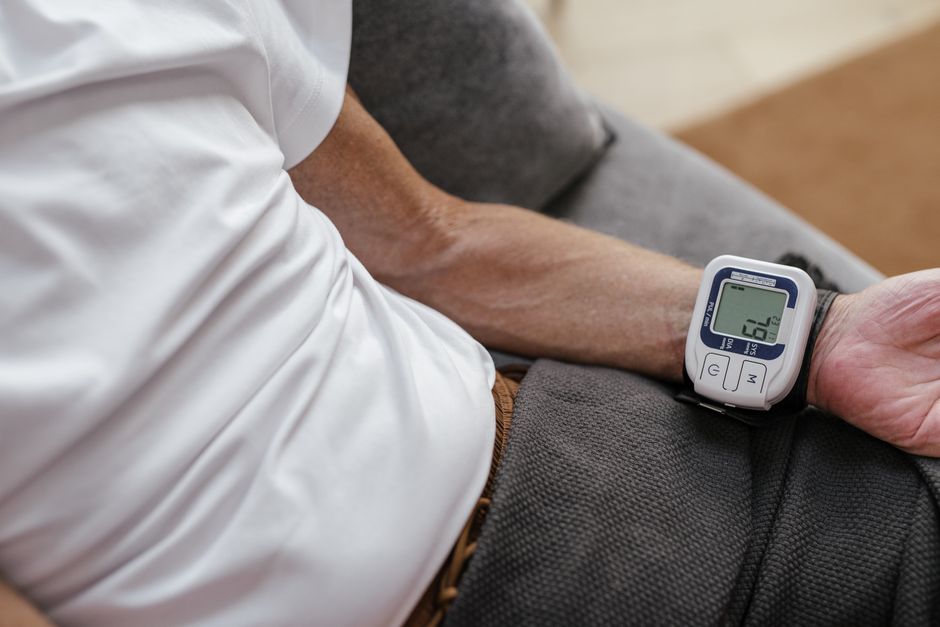
A home heart-rate reading in AFib is useful context, not a verdict: for many people without heart failure using rate-control treatment, the 2023 ACC/AHA/ACCP/HRS guideline uses a resting target below 100 to 110 beats per minute, guided by symptoms. A persistent fast reading merits clinician review, while chest pain, severe breathlessness, fainting, confusion, or stroke-like symptoms require urgent assessment regardless of the number.
What is a normal resting heart rate when you have AFib?
There is no single “normal” resting number for every person with AFib; the relevant comparison is the treatment target set for the individual, plus how they feel. The 2023 ACC/AHA/ACCP/HRS atrial fibrillation guideline recommends a resting rate below 100 to 110 beats per minute for people without heart failure who are candidates for selected rate-control strategies, and explicitly says that symptoms should guide the target.
This is a distinction worth preserving. A home monitor supplies a measurement; rate control is a clinical judgment about whether that measurement is associated with symptoms and whether a lower goal is appropriate for the person’s cardiac circumstances. The 2023 guideline identifies selected situations in which a lower goal can be appropriate, including rate-related cardiac dysfunction, cardiac resynchronization therapy, and tachycardia-induced cardiomyopathy.
The evidence behind the broader target is not a contest between careful and careless care. In the RACE II trial described in the 2023 guideline, 614 people with permanent AFib were assigned to lenient resting control below 110 beats per minute or strict resting control below 80 beats per minute. The primary composite outcome occurred in 12.9% of the lenient group and 14.9% of the strict group; lenient control was noninferior. The practical implication is blunt: a lower number is not automatically a better number.
| What the reading represents | How to interpret it |
|---|---|
| A resting rate below 100 to 110 beats per minute | For selected people without heart failure, this is the general 2023 ACC/AHA/ACCP/HRS rate-control range; the individual plan can differ. |
| A reading above the planned range | Record it with symptoms, activity, and medication timing, then seek clinician guidance if it persists or symptoms are not controlled. |
| A fast or irregular rate with serious symptoms | The number becomes secondary: the American Heart Association and NHS describe acute symptoms that require emergency assessment. |
Is a heart rate of 120 dangerous with AFib?
A heart rate of 120 is not, by itself, enough to classify the situation as dangerous; whether it is resting or activity-related, persistent or brief, and accompanied by symptoms matters more. It is above the general resting range in the 2023 ACC/AHA/ACCP/HRS guideline, so a sustained resting reading at that level is useful information for the clinician managing rate control.
By contrast, the symptom pattern can make the need for assessment immediate even when the displayed number is lower. The American Heart Association identifies chest pain or pressure as a medical emergency. The NHS likewise advises emergency services for a current fast or irregular heartbeat accompanied by chest pain, shortness of breath, sweating, nausea or vomiting, fainting, severe headache, one-sided weakness or numbness, visual changes, confusion, or speech difficulty.
The correct mental model is two-track: treatment targets help assess ongoing rate control; acute symptoms assess immediate risk. Do not collapse them into one threshold. MedlinePlus, updated in 2025, also advises against stopping or skipping prescribed AFib medicines without first discussing it with a health care provider.
Why does my heart rate jump to 125 to 135 during an AFib episode?
A jump to 125 to 135 during an AFib episode can occur because AFib involves abnormal electrical signals that make the atria quiver and can produce a rapid, irregular heartbeat rather than a steady pulse. The American Heart Association lists a rapid or irregular heartbeat among common AFib symptoms; the NHS also lists a heartbeat faster than 100 beats per minute as a possible symptom.
But a wrist reading is not an ECG. In a 2024 Journal of the American College of Cardiology study of 81 participants, including 20 assessed while in AFib, wearable heart-rate readings differed from ECG by a mean absolute 7.0 beats per minute at rest in AFib and 28.7 beats per minute at peak exercise in AFib. For Apple Watch during peak exercise in AFib, the 2024 study reported a mean absolute difference of 20.6 beats per minute.
The direction of error matters as much as its size. Across rest and exercise, the 2024 JACC study found that devices underestimated heart rate in AFib by an average of 17.0 beats per minute. A separate ambulatory study published in the International Journal of Cardiology in 2019 found larger average underestimation above 100 beats per minute: 28 beats per minute in the 100 to 120 range, 48 beats per minute in the 120 to 140 range, and 69 beats per minute above 140 beats per minute.
That is why a seemingly reassuring wearable value during exertion can be misleading. It is also why decisions about exercise should not be built on a single wrist reading; readers considering broader activity changes can review What Is Visceral Fat, and How Can Exercise Reduce It?, while keeping AFib-specific rate questions with the treating team.
For a more useful clinical conversation, log the reading, whether you were resting or active, whether the rhythm felt irregular, symptoms, and the timing of prescribed medication. MedlinePlus, updated in 2025, advises people with AFib to learn to check their own pulse and check it daily, noting that a machine may be less accurate because of AFib. An ECG remains the diagnostic test used to evaluate AFib, according to the NHS.
The durable principle is simple: record the pattern, do not self-adjust treatment from a consumer-device number, and escalate based on serious symptoms rather than waiting for a device to produce a particular figure.
Frequently Asked Questions
Should I go to the ER for a high AFib heart rate if I feel okay?
A high reading by itself does not establish an emergency threshold in the sources reviewed. The NHS advises clinical review when palpitations recur, worsen, or treatment is not controlling symptoms; emergency assessment is indicated when a current fast or irregular heartbeat occurs with chest pain, shortness of breath, sweating, fainting, confusion, speech difficulty, weakness, visual changes, or similar acute symptoms. A symptom-free reading that is persistently above the individualized plan is therefore a reason to contact the treating clinician, not a reason to change medicines independently.
Is my Apple Watch heart-rate reading accurate during AFib?
It can provide a useful observation, but it is not a substitute for ECG-based assessment. In the 2024 JACC study, the Apple Watch's mean absolute difference from ECG during peak exercise in AFib was 20.6 beats per minute; accuracy varied with activity and became worse at higher rates. MedlinePlus, updated in 2025, also cautions that machines can be less accurate in AFib.
What heart-rate target do doctors use for AFib rate control?
The 2023 ACC/AHA/ACCP/HRS guideline recommends a resting target below 100 to 110 beats per minute for patients with AFib without heart failure who are candidates for selected rate-control strategies, with symptoms guiding the choice. The same guideline describes a lower target for selected circumstances, including rate-related cardiac dysfunction, cardiac resynchronization therapy, or tachycardia-induced cardiomyopathy. The target is therefore a treatment decision, not a universal interpretation rule for every isolated home reading.
Sources
- 2023 ACC/AHA/ACCP/HRS Guideline for the Diagnosis and Management of Atrial Fibrillation
- American Heart Association: What Are the Symptoms of Atrial Fibrillation?
- NHS: Atrial Fibrillation
- MedlinePlus: Atrial Fibrillation Discharge Instructions
- Journal of the American College of Cardiology: Accuracy of Wearable Heart Rate Monitors During Exercise in Sinus Rhythm and Atrial Fibrillation
- International Journal of Cardiology: Accuracy of Wrist-Worn Heart Rate Monitors for Rate Control Assessment in Atrial Fibrillation
Disclaimer: This article is for general information only and is not medical advice. It is not a substitute for diagnosis or treatment by a qualified healthcare professional. Always speak to your doctor before acting on anything you read here.
You may also like

What Should I Do After One High PSA Test Result?
A practical guide to repeat PSA testing, temporary PSA elevations, free PSA, MRI, and biopsy discussions.

How Can I Improve Erectile Function Safely?
A practical, evidence-based guide to evaluating erectile dysfunction, improving lifestyle factors, and choosing treatments safely.

How Can I Find and Pay for Help That Lets My Parent Stay at Home?
A practical guide to home-care options, Medicare and Medicaid limits, local aging services, and safer ways to arrange support at home.